
Libra WeighTech
Accurate Weighing
Quality Services

A weighing scale that was accurate when it left the factory will not stay accurate forever. Mechanical stress, temperature changes, sensor fatigue, workshop vibration, and the simple passage of time all cause a scale's readings to drift — often by an amount too small to notice day to day, but large enough to cause financial loss over months. If your facility in Lahore, Faisalabad, Multan, or Rawalpindi uses scales for purchasing, dispatch, export certification, or pharmaceutical production, that drift is costing you money right now.
Weighing scale calibration in Pakistan — the process of comparing a scale's reading against a certified reference weight and adjusting it back to accuracy — is the single most cost-effective maintenance action you can take on any weighing system. Libra Weigh Tech provides professional, OIML-traceable calibration services across Punjab: on-site visits to your facility, laboratory calibration for portable instruments, re-verification for legal-for-trade scales, and Annual Maintenance Contracts (AMC) for organisations that need scheduled service without the burden of managing it themselves.
Weighing scale calibration is a formal, documented comparison between the output of a scale under test and the true value represented by a certified reference weight — followed by adjustment, if necessary, to bring the scale within its specified accuracy tolerance.
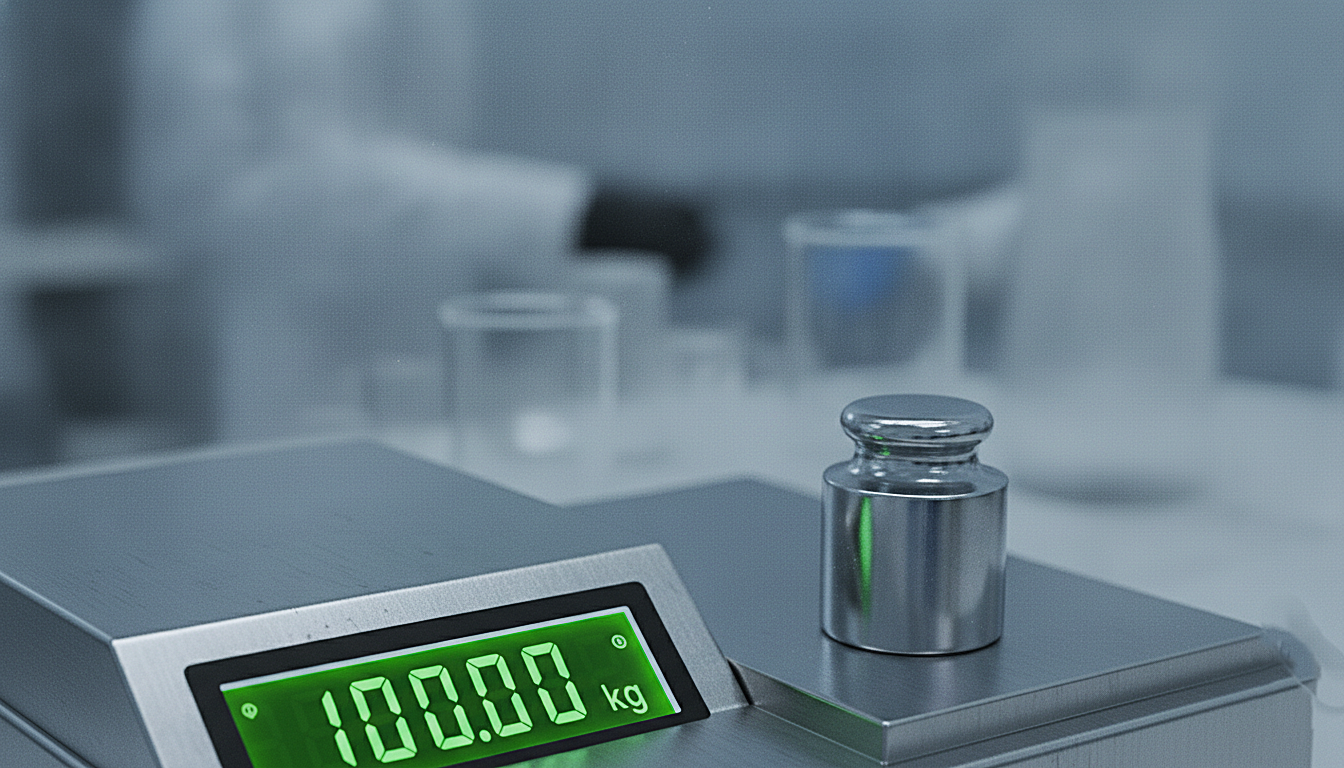
It is important to distinguish calibration from a simple 'zero reset.' Zeroing a scale corrects the no-load reading but does nothing to fix span error — the error that builds up across the measurement range. A scale that reads 0.0 kg with no load may still read 102.3 kg when you place a certified 100 kg weight on it. That 2.3% span error is invisible to the operator but very visible on the bottom line.
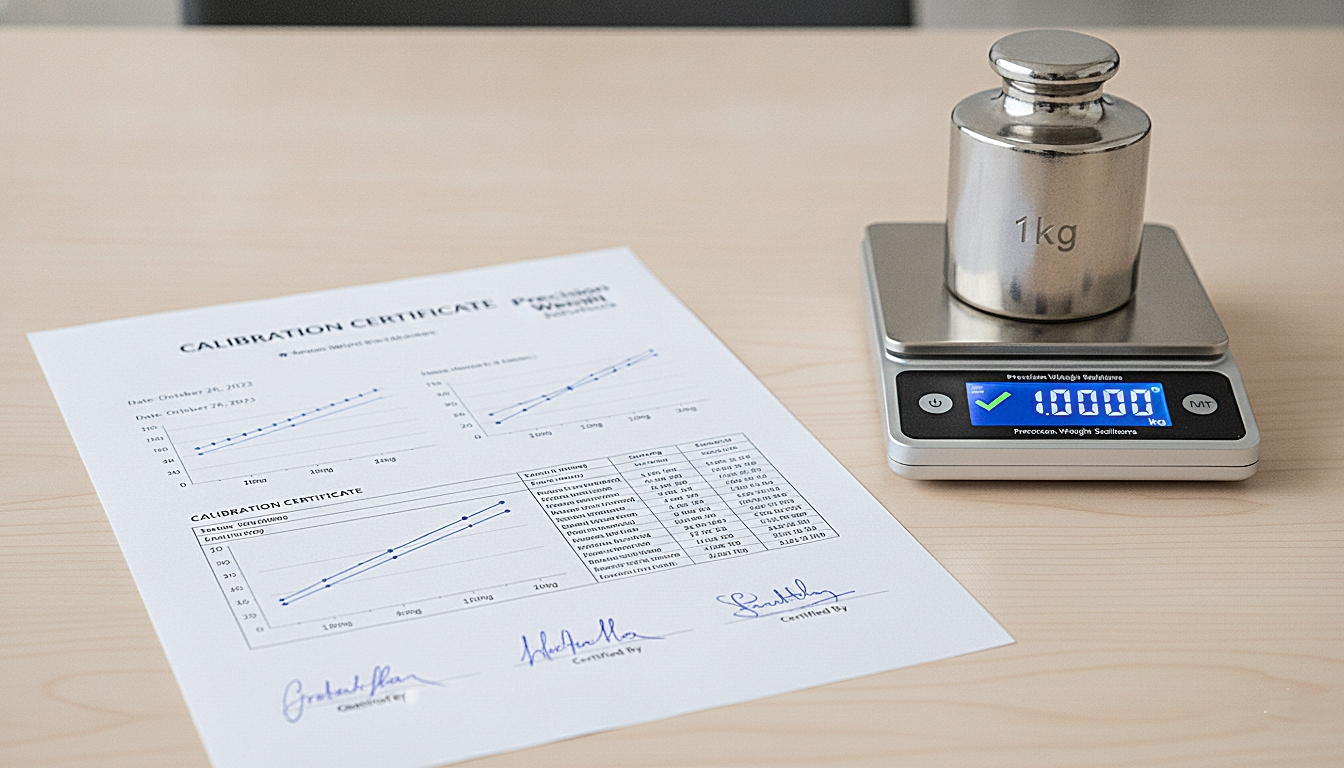
A professional calibration certificate documents the scale's pre-adjustment readings, the reference weights used (with their own traceable certificates), the post-adjustment readings, and the technician's declaration that the instrument meets — or does not meet — its stated accuracy class. For legal-for-trade applications — retail sales, commodity purchasing, export documentation, pharmaceutical batch release — an uncalibrated or out-of-tolerance scale is not just a financial risk; it is a regulatory violation under Pakistan's Weights and Measures Ordinance.
See also: Weighing scale supplier in Punjab Pakistan

On-site calibration is carried out at your facility using portable certified reference weights transported by the Libra Weigh Tech calibration team. It is the right choice for fixed platform scales, floor scales, truck weighbridges, tank and silo weighing systems, production-line checkweighers, and any instrument too large or heavy to transport. Our technicians travel to sites across Lahore, Faisalabad, Multan, and Rawalpindi, carrying reference weights traceable to PNAC and ultimately to the International Bureau of Weights and Measures (BIPM). On-site calibration minimises your downtime — the scale is calibrated in its installed position, under real operating conditions, and returned to service the same day in most cases.
For compact, portable instruments — bench scales, postal scales, counting scales, analytical balances, and hand-held devices — laboratory calibration at our controlled facility in Punjab delivers higher precision because environmental variables (temperature, vibration, air currents) are controlled. The instrument is collected, calibrated in the lab, re-certified, and returned with a full calibration certificate.
Weighbridge calibration is a specialist service requiring heavy test vehicles or large certified test weights — often in 500 kg or 1,000 kg increments, stacked to simulate full truck loads. Libra Weigh Tech coordinates weighbridge calibration for cement plants, logistics terminals, and agri-commodity depots in Lahore, Multan, and Rawalpindi, liaising with PSQCA-authorised test weight providers where required. A calibrated weighbridge supports legal-for-trade dispatch documentation and protects operators from overloading fines on national highways.
Scale re-verification is a formal inspection and re-stamping process carried out by or under the authority of a government-recognised body — in Pakistan, primarily the Pakistan Standards and Quality Control Authority (PSQCA) — to confirm that a scale remains fit for legal-for-trade use.
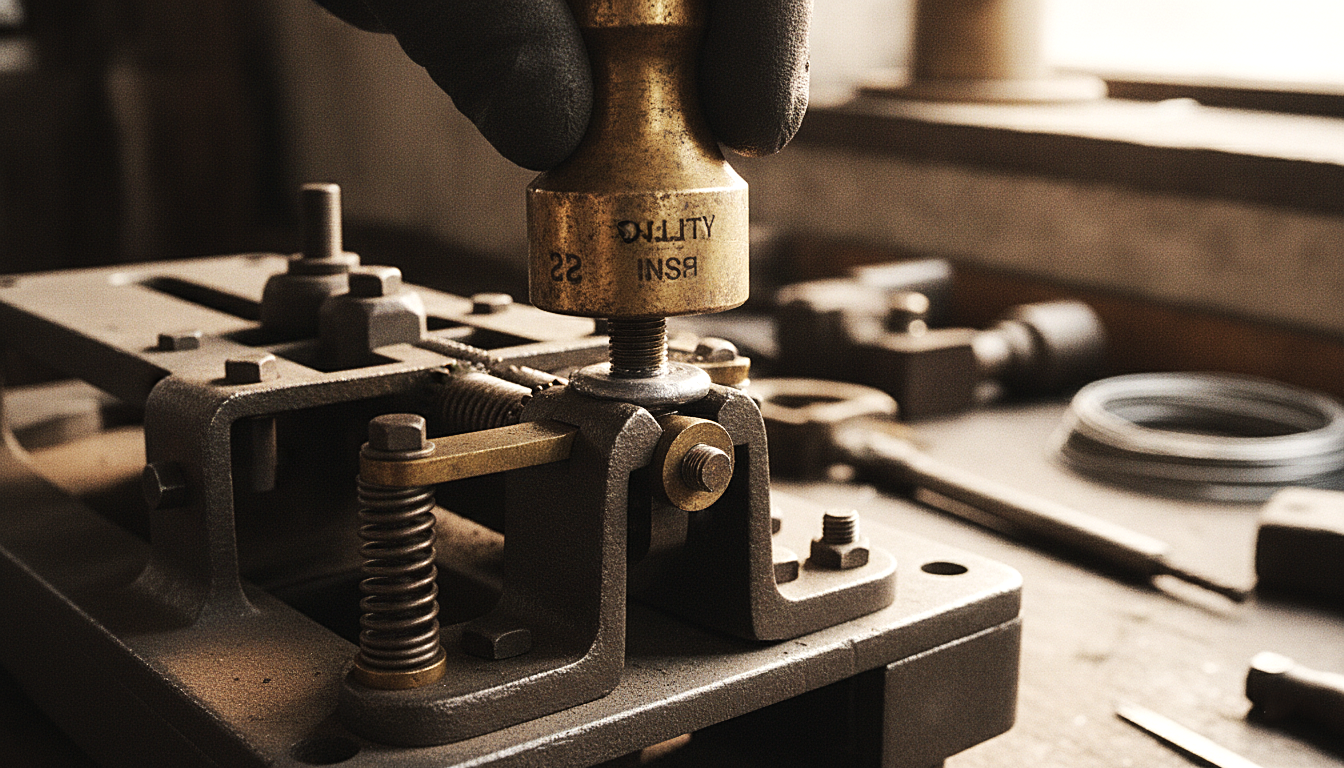
Re-verification differs from calibration in a subtle but important way: calibration is a technical measurement process that can be performed by any competent laboratory with traceable references; re-verification is a legal process that results in an official stamp confirming the instrument is approved for trade under Pakistani law.
|
Aspect |
Calibration |
Re-verification |
|
Performed by |
Competent calibration lab (e.g. Libra Weigh Tech) |
PSQCA inspector or authorised delegate |
|
Output |
Calibration certificate with measurement data |
Official stamp/seal on the instrument |
|
Legal status |
Technical proof of accuracy |
Legal authorisation for trade use |
|
Frequency |
Annual or as needed |
Annual — required by law for trade scales |
|
When required |
Before re-verification; after repair; ISO/GMP audit |
First use; after repair; periodic inspection |
Libra Weigh Tech assists clients in Lahore, Faisalabad, Multan, and Rawalpindi with the preparation, documentation, and coordination required for re-verification. We ensure the scale is within tolerance before the inspector arrives — reducing the risk of a failed inspection and the downtime that follows.
When a calibration service advertises OIML calibration or traceable calibration, it is making a claim about the reference weights used during the process — not about the scale being calibrated.
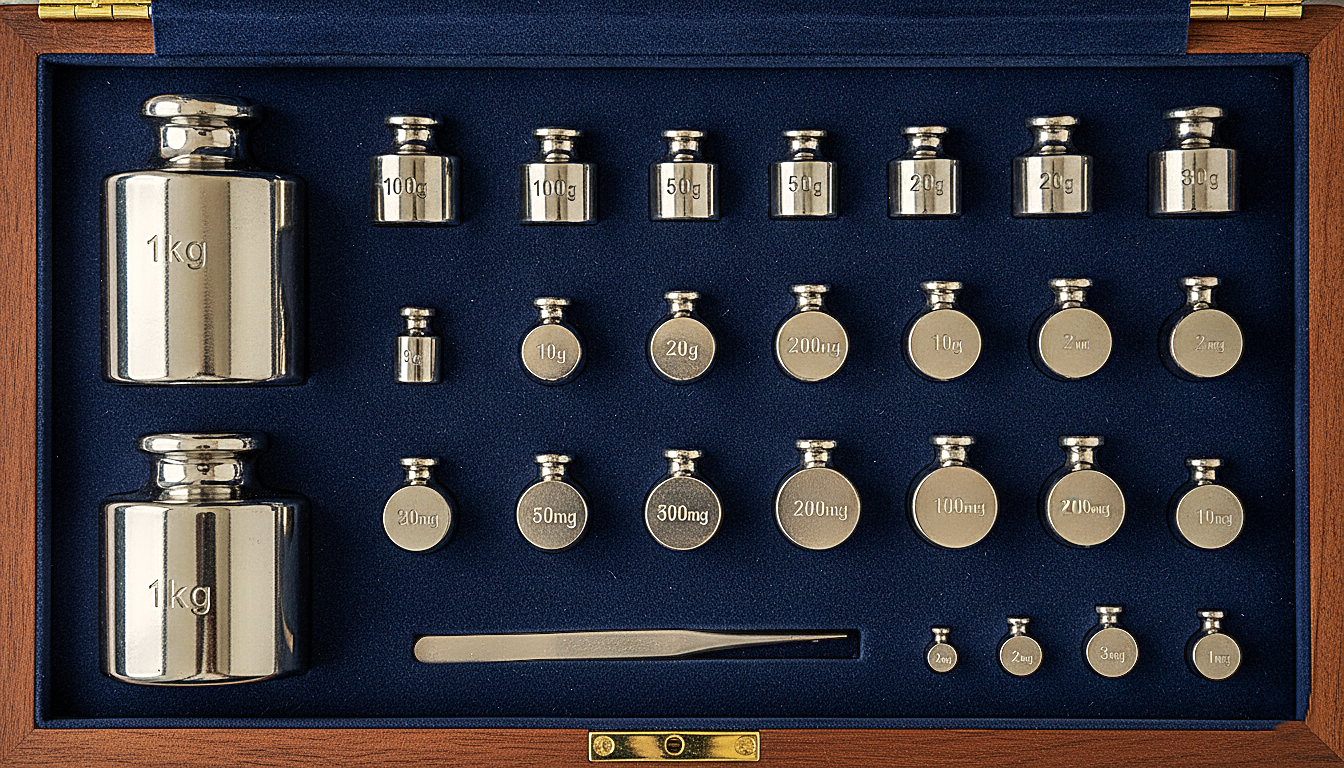
OIML (Organisation Internationale de Métrologie Légale) publishes international recommendations for weights and measures, including OIML R 111, which specifies accuracy classes (E1, E2, F1, F2, M1–M3) for reference weights used in calibration. An OIML E2 or F1 class weight, when its certificate is current, represents a known mass with documented uncertainty — typically within 1–3 mg per kilogram.
Traceable calibration means the reference weights used can be linked — through an unbroken chain of documented comparisons — to the national measurement standard of Pakistan and ultimately to the SI kilogram. Every calibration certificate Libra Weigh Tech issues references the specific weights used, their OIML class, their certificate numbers, and the laboratory that issued those certificates.
An ISO 9001 audit, a pharmaceutical GMP inspection, a food export certification, or a legal dispute about a scale's accuracy will all ask the same question: 'How do you know your reference was accurate?' Traceable calibration is the only answer that satisfies that question.
Industrial scale repair in Lahore — and across Faisalabad, Multan, and Rawalpindi — is a service Libra Weigh Tech provides alongside calibration, because the two are closely related. A scale that fails calibration often does so because of a worn or damaged load cell, a corroded junction box, a damaged display indicator, or a broken cable.
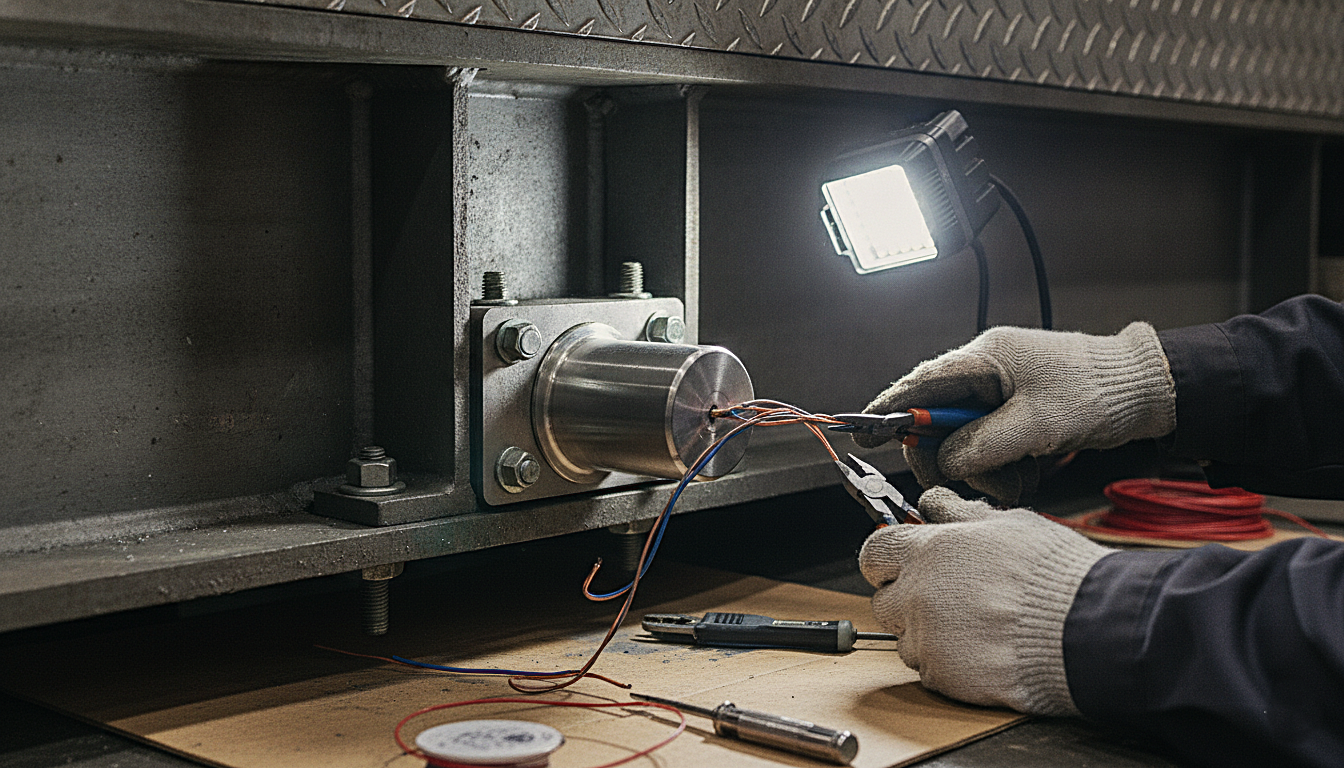
Our repair capabilities cover the following — and because Libra Weigh Tech is also an authorised component supplier, repair parts are drawn from our own certified stock. After repair, the instrument undergoes a full calibration procedure and a new calibration certificate is issued.
• Load cell replacement — single point, shear beam, compression, and S-type
• Junction box repair and rewiring
• Indicator / display board replacement
• Platform deck repair, surface replacement, and levelling
• Cable replacement and IP-sealed re-entry at the load cell body
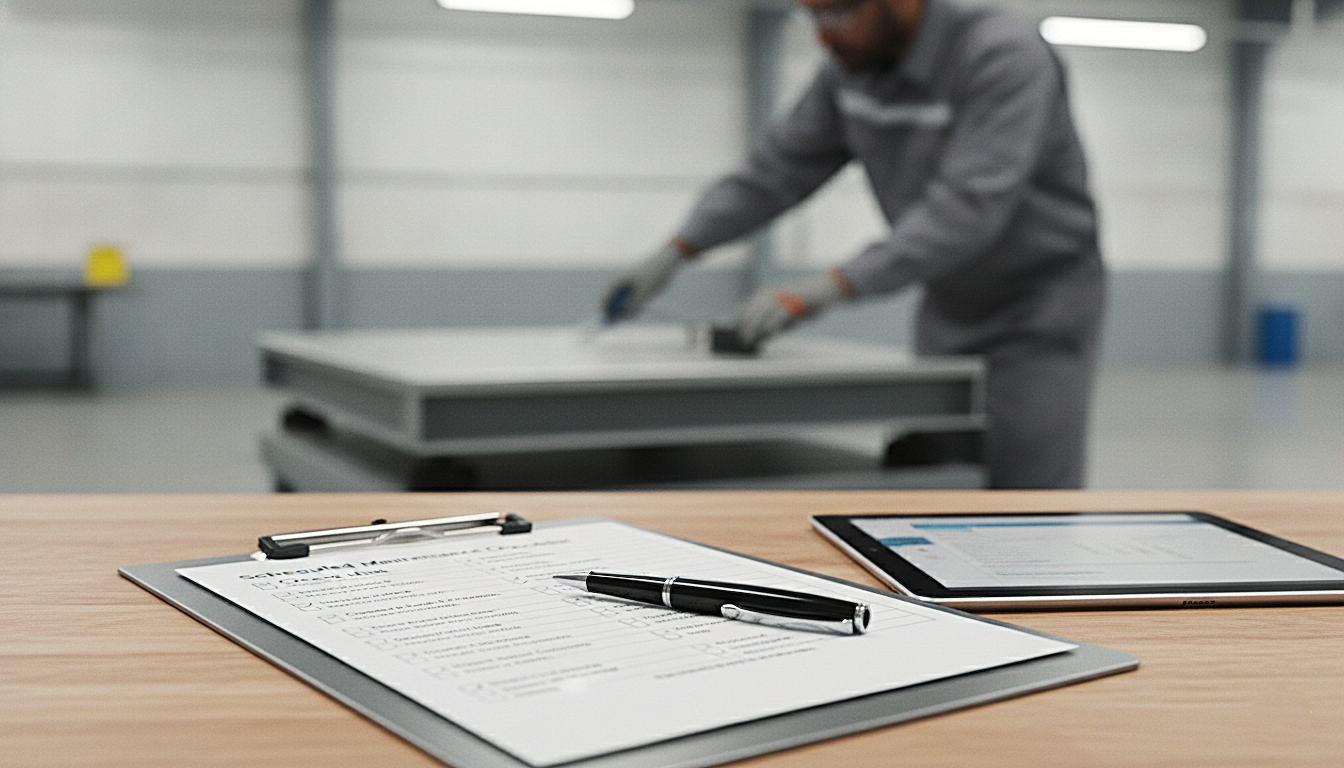
A weighing scale AMC (Annual Maintenance Contract) is a pre-agreed service agreement under which Libra Weigh Tech provides scheduled calibration visits, priority repair response, and documentation management for a fixed annual fee. AMC contracts are especially valuable for manufacturing plants, pharmaceutical companies (GMP compliance), food processors (HACCP), export-oriented businesses in Lahore, Faisalabad, and Rawalpindi, and agri-commodity operations in Multan operating under PSQCA oversight.
|
AMC Contract — What Is Included |
||
|
📅 |
Scheduled calibration visits |
Two visits per year as standard (additional visits available on higher contract tiers) |
|
⚡ |
Priority repair response |
Emergency call-out within 24 hours across Lahore, Faisalabad, Multan, and Rawalpindi |
|
📋 |
Calibration register management |
Libra Weigh Tech maintains your instrument register with calibration dates and due-date alerts |
|
📄 |
Audit-ready certificates |
Certificates formatted for ISO 9001, GMP, and PSQCA compliance — issued after each visit |
|
🔧 |
Discounted spare parts |
Reduced rates on load cells, indicators, cables, and junction boxes for AMC clients |
An AMC removes the burden of tracking calibration schedules from your team and ensures you are never caught with an out-of-date certificate during a surprise audit.
|
Calibration Certificate Contents — Standard Format |
|
|
1 |
Instrument details: make, model, serial number, capacity, and readability |
|
2 |
Location of calibration: on-site address or laboratory |
|
3 |
Date of calibration and certificate issue date |
|
4 |
Reference weights used: OIML class, certificate numbers, and issuing laboratory |
|
5 |
Test results: pre-adjustment readings at 0%, 25%, 50%, 75%, and 100% of rated capacity |
|
6 |
Post-adjustment readings confirming the instrument meets its stated accuracy class |
|
7 |
Maximum permissible error (MPE) values per OIML R 76 for the declared accuracy class |
|
8 |
Technician signature and Libra Weigh Tech stamp |
|
9 |
Recommended next calibration date |
This format satisfies the documentation requirements of ISO 9001 quality management systems, pharmaceutical GMP/GDP guidelines, food safety HACCP plans, and PSQCA legal-for-trade requirements. Certificates are issued in hard copy and as a signed PDF for digital document management systems.

|
City |
Coverage Areas |
Typical Response |
|
Lahore |
All districts — Gulberg, DHA, SITE, Sundar Industrial Estate, Raiwind |
Same day / next day |
|
Faisalabad |
D-Ground, Chiniot Road, M3 Industrial City, Jaranwala |
1–2 working days |
|
Multan |
Cantt, Bypass industrial zone, Vehari Road, Bosan Road |
1–2 working days |
|
Rawalpindi |
Industrial estate, Taxila, Chakri Road, Wah Cantt |
1–2 working days |
For sites outside these areas — Gujranwala, Sialkot, Sargodha, Bahawalpur, and other Punjab districts — please contact us. We travel on request, typically with 2–3 days' notice.
1. OIML-traceable reference weights — documented chain to SI — Our calibration team uses OIML F1 and F2 class reference weights with current certificates. Every calibration certificate we issue references those weight certificates by number. Your auditor can follow the traceability chain from your scale to the national standard in one step.
2. On-site service across Lahore, Faisalabad, Multan, and Rawalpindi — We come to you. Industrial scale calibration on-site means your scale is tested in its actual operating position, with its actual mounting hardware and cable run — not under controlled lab conditions that may not reflect real-world performance.
3. Repair and calibration in a single visit — If we find a fault during calibration, we carry common spare parts — load cells, cables, junction boxes — to repair and recalibrate in the same visit. Most competitors require a second appointment.
4. AMC contracts with audit-ready documentation — Our AMC format is designed for ISO 9001, GMP, and PSQCA compliance. Calibration registers, due-date alerts, and certificate archives are managed by us — not left to your maintenance team.
5. Industrial scale repair in Lahore and across Punjab — Scale repair is not a side service for us — it is part of a complete instrument lifecycle offering. Genuine components, professional repair, and immediate recalibration under one contract.
Q: How often does a weighing scale need calibration in Pakistan?
A: For legal-for-trade scales — those used in retail, commodity purchasing, pharmaceutical batch release, or export — annual calibration and re-verification is the standard requirement under Pakistan's Weights and Measures Ordinance. Industrial scales used in harsh environments such as flour mills, chemical plants, and outdoor weighbridges should be checked semi-annually. Libra Weigh Tech can advise the correct interval for your specific instruments and use case, and will manage the schedule under an AMC contract if required.
Q: What is the difference between calibration and re-verification for a scale in Pakistan?
A: Calibration is a technical measurement process — comparing your scale's readings against traceable reference weights, documenting the results, and adjusting if necessary. It can be performed by any competent calibration provider, including Libra Weigh Tech. Re-verification is a legal process: a PSQCA inspector confirms the scale meets the requirements of Pakistan's weights and measures legislation and applies an official stamp. You need calibration to confirm your scale is accurate; you need re-verification to confirm it is legally authorised for trade. A scale that passes calibration will pass re-verification — which is why preparing with a calibration visit before the inspector arrives is strongly recommended.
Q: Can Libra Weigh Tech issue a calibration certificate that satisfies an ISO 9001 audit?
A: Yes. Our calibration certificates include all the information required by ISO 9001 Clause 7.1.5 on monitoring and measurement resources: instrument details, calibration date, reference standard traceability, measurement results, maximum permissible errors, and technician identification. We can also maintain your calibration register and provide due-date reminders under an AMC contract, so you are never caught with an expired certificate during an external audit. Clients in Lahore's pharmaceutical sector and Faisalabad's food processing industry use our certificates for ISO, GMP, and buyer audits regularly.
An accurate weighing scale is not a one-time purchase — it is an instrument that requires ongoing care to remain within specification. Whether you need a single OIML-traceable calibration certificate for a platform scale in Rawalpindi, a weighbridge calibration for a cement depot in Multan, an industrial scale repair in Lahore, or a full weighing scale AMC across multiple facilities in Faisalabad, Libra Weigh Tech has the technical team, the certified reference equipment, and the documentation systems to deliver the service correctly — on time, and audit-ready.