Libra WeighTech
Accurate Weighing
Quality Services
libra_weightech
Weighing Scales in Pakistan: Complete Buying Guide (2026)

Weighing Scales in Pakistan: Complete Buying Guide (2026)

Tuesday, 01 September 2026

Weighing Scales in Pakistan: The Complete Buying Guide (2026)

From a grocer weighing rice in Multan's Kutchery Bazaar to a cement plant in Fauji Cement's supply chain tracking raw material by the ton, almost every transaction and every production line in the country depends on one unglamorous piece of equipment: an accurate scale. Getting weighing scales in Pakistan right — the correct type, the correct capacity, and a reading that actually holds its accuracy over time — affects your revenue, your legal compliance, and your customers' trust in equal measure.

This guide walks through every major category of weighing scale used in Pakistan today, what drives their price, which laws and standards apply, and how to choose equipment that stays accurate for years rather than months. It's written for two audiences at once: a factory or warehouse manager sourcing an industrial scale, and a shop owner or homebuyer comparing a digital weighing machine. Wherever the two paths diverge, we've said so.

In short: Pakistan's weighing scale market spans household digital scales (roughly PKR 2,500–30,000) through to full truck weighbridges (roughly PKR 1.5–4.5 million), with everything — capacity, accuracy class, calibration, and legal-for-trade certification — determining which one you actually need. The sections below break each of these down.

What Is a Weighing Scale, Exactly?

At its simplest, a weighing scale converts a physical force — the pull of gravity on an object — into a number you can read. A traditional mechanical scale does this with springs or counterbalances. A modern digital scale does it electronically, and almost every digital scale sold in Pakistan today, from a kitchen scale to a 200-ton weighbridge, is built around the same three components:

  • A load cell — the sensor that physically deforms, by a tiny and precise amount, when weight is applied to it, and converts that deformation into an electrical signal.
  • A weighing indicator — the electronic unit that reads the load cell's signal, converts it into a weight value, and displays it (often with extra functions like tare, totalling, or checkweighing).
  • A structure or platform — the frame, deck, or pan that physically supports the item being weighed and transfers its weight into the load cell.

Where scales differ is in how large that structure is, how many load cells it uses, what accuracy class the electronics are built to, and what environment they're designed to survive — a laboratory balance and a steel-yard crane scale share the same basic principle but almost nothing else.

Why Weighing Scales Matter Across Pakistan's Industries

Pakistan's economy runs on weight-based transactions more than most people realise. A few examples:

Essential industrial use of heavy-duty weighing scales in Pakistan across agriculture, textiles, and manufacturing.

  • FMCG and food processing — batching and packaging lines at companies producing everything from snacks to dairy depend on checkweighing accuracy to control cost and meet labelled net-weight claims.
  • Cement and construction materials — raw material dosing, clinker tracking, and outbound truck billing all run on floor scales and weighbridges.
  • Sugar, rice, and agriculture — mandis, ginning factories, and sugar mills weigh incoming cane, wheat, and cotton in bulk, often on platform or floor scales sized in tons rather than kilograms.
  • Textiles — Pakistan's largest export sector weighs yarn, fabric rolls, and finished goods at multiple stages of production.
  • Pharmaceuticals — formulation and quality-control labs need analytical balances accurate to fractions of a milligram, since dosing errors have real consequences.
  • Logistics and freight — transport companies and highway authorities use truck scales to bill freight correctly and enforce axle-load limits.
  • Retail and gold/jewellery trade — shopkeepers and jewellers need scales that are both accurate and, legally, verified for trade.

Because the same broad keyword — "weighing scale" — covers a PKR 3,000 bathroom scale and a PKR 4 million weighbridge, the rest of this guide is organised by scale type, so you can jump to what's actually relevant to you.
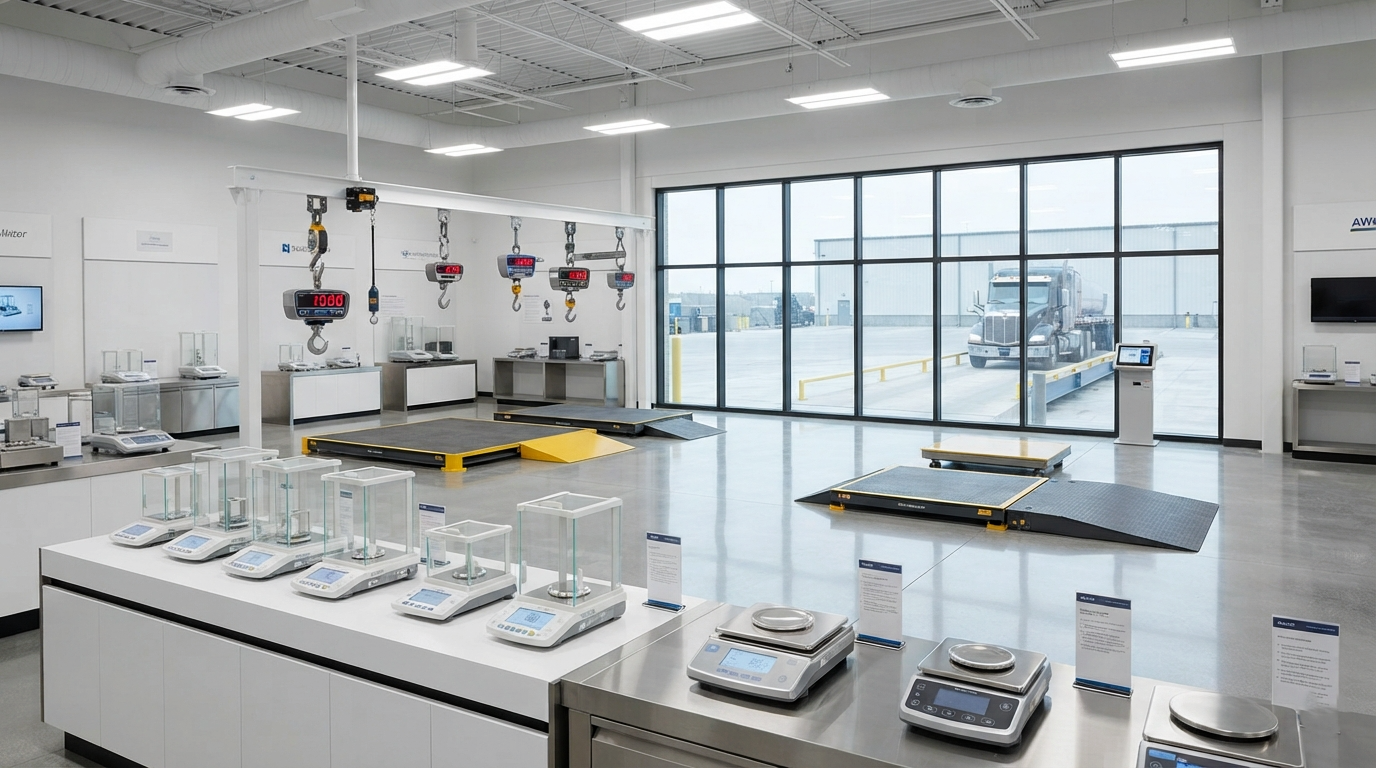
Types of Weighing Scales Available in Pakistan

Complete showcase of commercial, lab, and industrial weighing scales in Pakistan.

1. Heavy-Duty & Industrial Scales

These are the workhorses of factories, mandis, and logistics yards.

  • Platform scales sit on or near the floor and typically handle anywhere from a few kilograms up to a few tons — common in warehouses, godowns, and retail back-rooms. Libra WeighTech offers both fully imported and customized platform scales built to a specific deck size and capacity.
  • Floor scales are the larger, often pit-mounted or heavy free-standing cousin of the platform scale, built for pallets, drums, and bulk sacks. See the floor scales range for capacities used in cement, sugar, and FMCG plants.
  • Truck scales (weighbridges) weigh an entire loaded vehicle, from around 20 tons up to 200-ton capacity, and are essential for any business billing freight by weight or complying with National Highway Authority (NHA) axle-load rules. Libra WeighTech's truck scales & weighbridge line covers both pit-type and portable designs.
  • Axle weighers measure a vehicle one axle at a time rather than as a single gross weight — useful for portable checkpoints and overload enforcement. See axle weigher scales.
  • Crane scales hang between a crane hook and the load itself, letting steel yards, ports, and construction sites confirm a safe lifting weight without a separate weighing step. Libra WeighTech's crane scales range is sourced from Cas (Korea).

2. Load Cells & Weighing Electronics

Every scale above is only as accurate as the sensor and electronics inside it.

  • Load cells come in several mechanical designs suited to different applications: bending beam and single-ended beam types for bench and small platform scales; compression-type cells for tanks, silos, and truck scales; S-type load cells for suspended and hopper weighing; and single-point load cells for retail and small bench scales where the load may sit off-centre. Libra WeighTech is an authorized dealer for Minebea Intec (Germany), Scaime (France), and Max Technologies (USA) load cells — see the full load cell range.
  • Weighing indicators are the display/control unit that reads the load cell and shows the result — the component that turns a raw sensor signal into a number you can act on. Browse weighing indicators.
  • Process indicators, transmitters, and system controllers extend that same principle into automated batching and dosing lines — see process indicators, process transmitters, and process/system controllers.
  • Junction boxes combine the signals from multiple load cells on the same scale (common on floor scales and weighbridges with four or more cells) — see junction boxes.

3. Commercial & Retail Scales

  • Compact bench scales are the standard counter-top scale for shops, small warehouses, and packing stations — see compact bench scales.
  • Counting scales weigh a sample of small identical parts (screws, components, tablets) and calculate the total piece count from average unit weight — a major time-saver in parts inventory. See counting scales.
  • Label printing scales weigh and print a barcode or price label in one step, common in supermarkets and packaged-meat or produce counters — see label printing scales.

4. Laboratory & Precision Instruments

  • Analytical and precision balances measure from whole kilograms down to 0.1 mg, and are standard equipment in pharmaceutical, chemical, and quality-control labs across Pakistan — see analytical & precision balances.
  • Moisture analyzers aren't a "scale" in the traditional sense but use precision weighing to measure moisture content in grain, textiles, and raw materials — see moisture analyzers.
  • Paint mixing scales use precision weighing rather than volume measurement to dose pigments and tinting bases accurately — see paint mixing scales.

5. Personal & Household Scales

Outside the industrial and commercial space, most homes and small shops in Pakistan use one of four consumer scale types: digital kitchen scales for cooking and baking, digital bathroom/body scales for tracking body weight (often with body-fat or BMI estimation), baby scales for infant growth monitoring, and gold or jewellery scales, which need very fine readability (often to 0.01 g) despite their small size. These typically retail from roughly PKR 2,500 up to PKR 30,000 depending on brand, build quality, and features such as Bluetooth connectivity or body-composition analysis. They fall outside Libra WeighTech's industrial product range, but the accuracy and calibration principles later in this guide apply to them too.

Quick Comparison

Scale Type Typical Capacity Common Use in Pakistan
Platform scale 30 kg – 3 ton Warehouses, mandis, retail godowns
Floor scale 500 kg – 10 ton Factories, cement & sugar mills
Truck scale / weighbridge 20 – 200 ton Logistics, quarries, freight billing
Crane scale 500 kg – 50 ton Steel yards, ports, construction
Bench / counting scale 1 kg – 300 kg Retail counters, parts counting
Analytical / precision balance 0.1 mg – 30 kg Pharma & quality-control labs
Household digital scale 3 kg – 180 kg Kitchens, bathrooms, gold shops

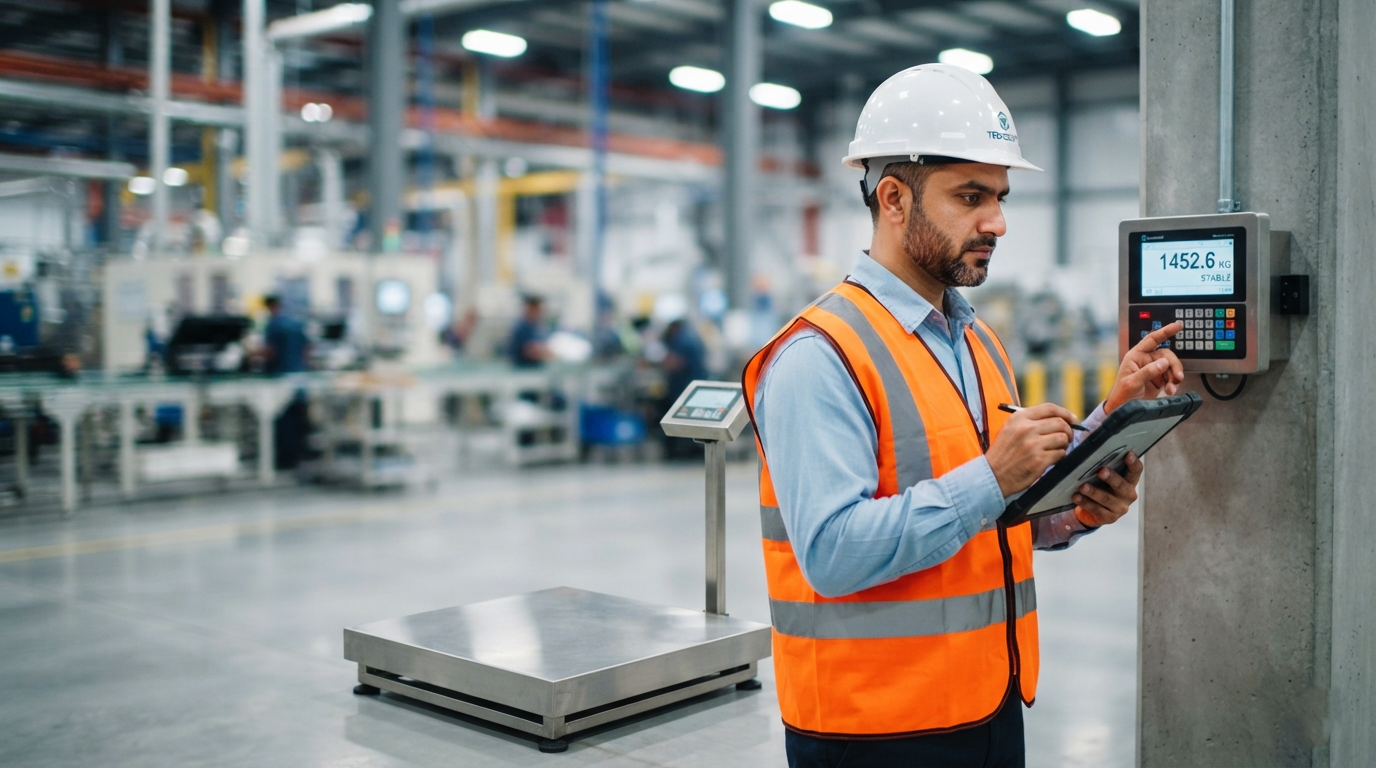
How to Choose the Right Weighing Scale in PakistanIndustrial plant engineer inspecting digital weighing scales in Pakistan for factory use.

Six factors matter more than brand names or marketing claims:

  1. Capacity. Choose a maximum capacity comfortably above your heaviest expected load — a scale run near its ceiling wears out faster and drifts out of calibration sooner.
  2. Accuracy and readability. A scale's "readability" (the smallest increment it displays, e.g. 1 g, 10 g, or 1 kg) should match the task — a pharmaceutical balance and a truck scale have completely different tolerance needs.
  3. Load cell type and build. Compression cells suit static heavy loads; single-point and shear-beam cells suit smaller platforms; stainless-steel, sealed (IP67/IP68-rated) cells suit washdown or outdoor environments.
  4. Environment. Dust, humidity, temperature swings, and vibration all degrade accuracy over time — an open-air weighbridge and an air-conditioned lab need very different hardware even at the same capacity.
  5. Legal-for-trade status. If the scale will ever be used to buy, sell, or bill by weight, it needs to be a verified, legal-for-trade unit under Pakistani law (more on this below) — not just any accurate scale.
  6. After-sales support. Industrial scales need periodic calibration and occasional repair. A supplier with local technicians, spare parts, and a fast breakdown-response time will save far more money over five years than a slightly lower purchase price.

Weighing Scale Price in Pakistan: What Affects the Cost

There's no single "weighing scale price in Pakistan" because the category spans several completely different products. As a rough guide:Visual comparison of different quality grades and capacities of weighing scales in Pakistan.
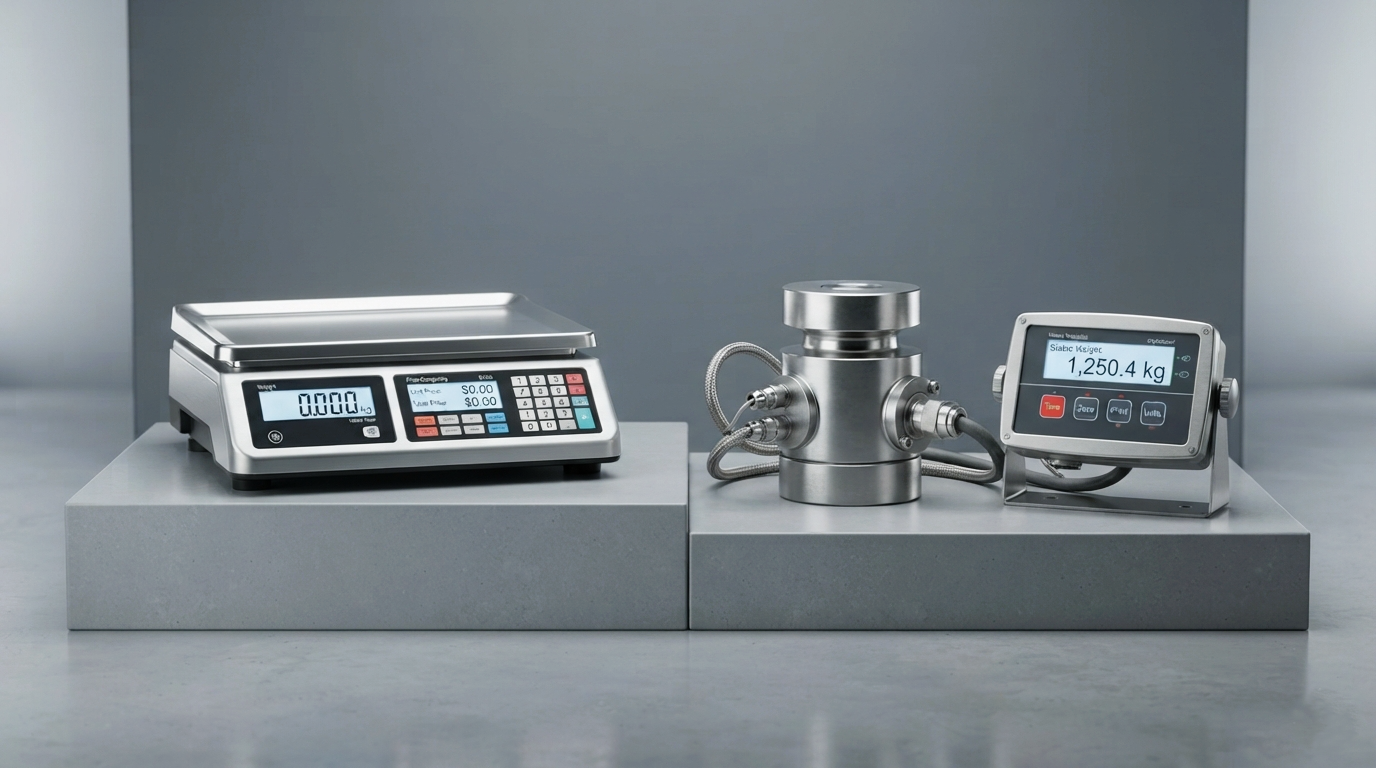
  • Household digital scales (kitchen, bathroom, baby) generally range from about PKR 2,500 to PKR 30,000, driven mainly by brand and extra features like Bluetooth or app connectivity.
  • Commercial bench and platform scales vary widely by capacity, build material (mild steel vs. stainless steel), and load cell brand.
  • Truck scales/weighbridges typically range from roughly PKR 1.5 million to PKR 4.5 million, depending on capacity (20–150 ton), pit-type versus portable design, and load cell brand.
  • Laboratory balances are priced primarily by readability — a milligram-class analytical balance costs substantially more than a gram-class bench scale of similar physical size.

Across every category, four things move the price: capacity, accuracy class, load cell/electronics brand, and installation complexity (a pit-mounted weighbridge costs more to install than a portable one, for instance). For an accurate, site-specific quote on industrial equipment, it's worth using a product finder or contacting a supplier directly rather than relying on a generic price list — capacity and site conditions change the number significantly.

Weighing Scale Laws, Standards & Calibration Requirements in Pakistan

This is the section most buying guides skip, and it matters more than most buyers realise.Certified calibration test procedure with precision weights on weighing scales in Pakistan.
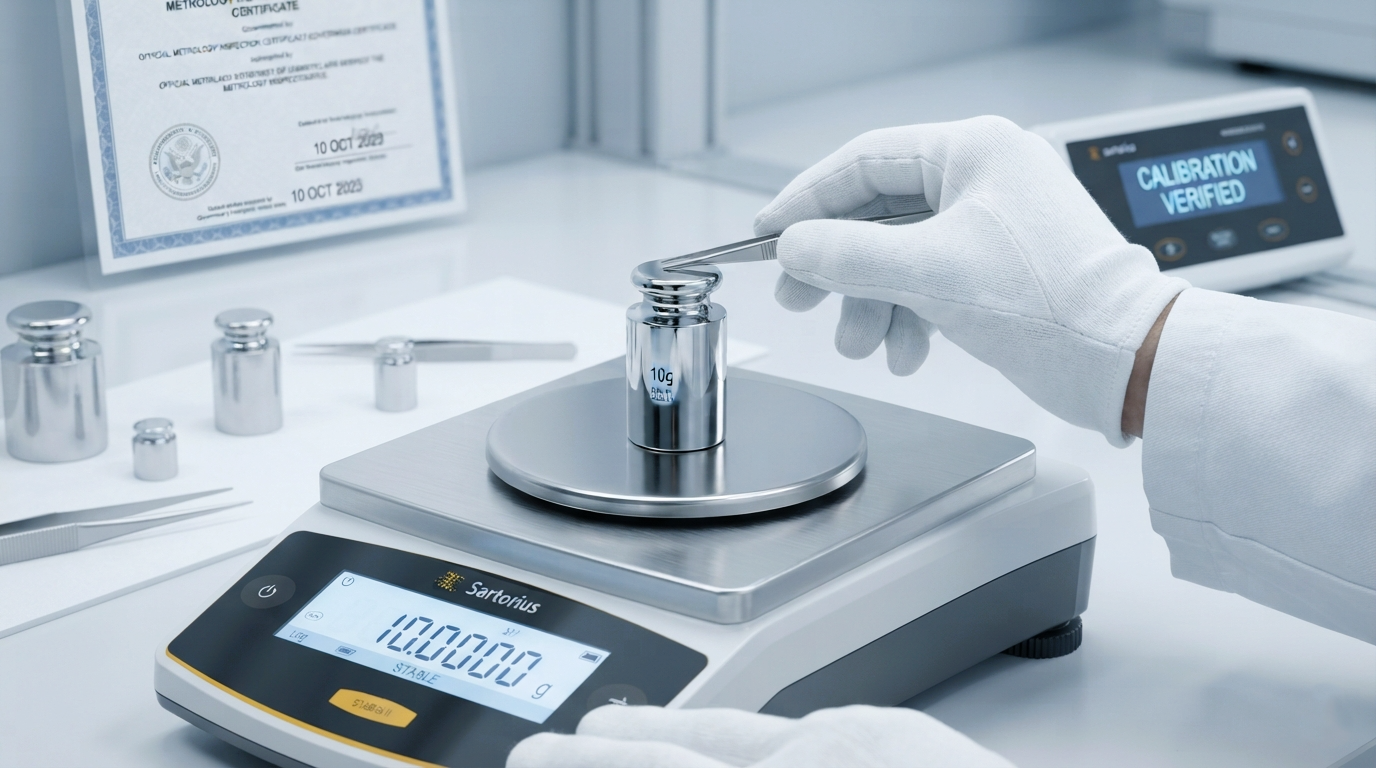
The regulator. The Pakistan Standards and Quality Control Authority (PSQCA) is the federal body responsible for weights and measures standards nationally, and is itself a member of the International Organization of Legal Metrology (OIML) — the global body whose recommendations underpin most modern scale certification. PSQCA maintains specific standards covering non-automatic weighing instruments, electronic weighing instruments, and load cells.

Provincial law. Day-to-day enforcement — verification, stamping, and licensing of weighing instruments used in trade — sits with provincial Weights and Measures legislation (for example, the Punjab Weights and Measures Ordinance, which explicitly defines "weighing instruments" to include scales, scale beams, balances, spring balances, and weighing machines).

What "legal for trade" actually means. Any scale used in a transaction where the reading determines a price — a shop counter, a grain mandi, a freight weighbridge — is expected to be verified and stamped under this framework, not merely "accurate." An uncertified scale used for billing, even if its reading is correct, can expose a business to compliance risk. Scales used purely for internal process control (checking a batch weight mid-production, for instance) generally fall outside this requirement.

Calibration frequency. As a general rule, industrial weighing scales should be calibrated at least once a year, while high-precision balances and high-throughput production lines often need monthly or even daily verification, since drift matters far more at their tolerance level. Environmental stress (temperature swings, vibration, dust, overloading) shortens that interval. Libra WeighTech provides OIML-compliant calibration and re-verification services with certified technicians across Pakistan, alongside 24-hour emergency response for breakdowns.

How to Maintain Your Weighing Scale Between Calibrations

A few habits meaningfully extend a scale's accurate lifespan:Industrial worker performing leveling and routine cleaning on weighing scales in Pakistan.

  • Keep the platform clean and clear. Dust, spilled material, and debris under a platform scale or on a load cell mount are among the most common causes of drift.
  • Avoid side-loading and shock loading. Dropping or dragging loads onto a scale stresses the load cell well beyond its rated force and can permanently affect accuracy even if the scale still "works."
  • Level the scale properly, and re-check the level periodically — an unlevel platform introduces a systematic error that no amount of software calibration will fully correct.
  • Protect against environmental extremes where possible: shelter outdoor platform and floor scales from direct rain where feasible, and be mindful of temperature swings for precision balances.
  • Don't exceed rated capacity, even briefly — overload events are a leading cause of premature load cell failure.
  • Schedule calibration proactively rather than waiting for a visibly wrong reading — by the time drift is obvious, it's often been affecting your numbers for weeks.

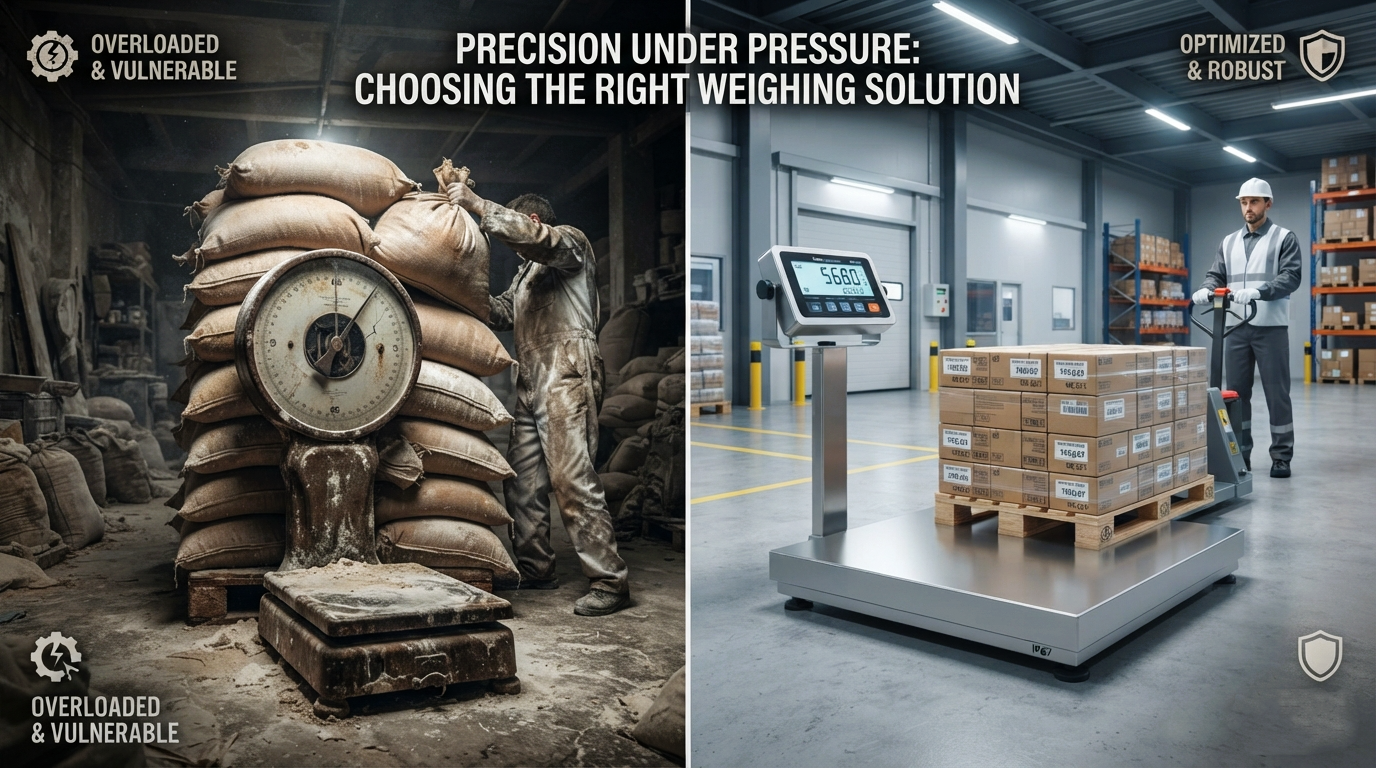
Common Mistakes to Avoid When Buying a Weighing ScaleVisual warning concept highlighting overload and environmental damage to weighing scales in Pakistan.

  • Buying on capacity alone. A scale rated for the right maximum weight but with poor readability at your typical load size will frustrate you daily — capacity and accuracy are two different specifications.
  • Ignoring the environment. A scale that performs perfectly in a showroom can drift or corrode within months on a dusty factory floor or an open-air weighbridge pit without the right IP rating and build.
  • Assuming "digital" means "legal for trade." Plenty of accurate digital scales are sold without the verification and stamping required for commercial transactions — check this explicitly if the scale will be used for billing.
  • Skipping calibration after installation and transit. A scale can be perfectly calibrated at the factory and still need re-verification once it's been moved, installed, and put into service.
  • Choosing on price alone for industrial equipment. A cheaper scale with no local calibration support, no spare parts, and a multi-day breakdown response can cost far more in downtime than the difference in purchase price.

Why Businesses Across Pakistan Choose Libra Weigh Tech

Libra WeighTech has supplied and supported weighing equipment in Pakistan since 2001 — 25 years of experience serving 715+ clients from Karachi to Peshawar, across sectors including FMCG, cement, sugar, pharmaceuticals, defence, and logistics, with clients such as Nestlé, Unilever, PepsiCo, Fauji Cement, and DG Cement. The company is an authorized dealer for Minebea Intec (Germany), Scaime (France), Ohaus (USA), and Max Technologies (USA), is ISO certified, and provides OIML-compliant calibration nationwide.Libra Weigh Tech engineering support and distribution of industrial weighing scales in Pakistan.

Its product range covers the full spectrum discussed in this guide — from 0.1 mg laboratory precision to 200-ton truck weighbridges — backed by 24-hour emergency breakdown response and on-site visits across its Multan head office, Lahore, Islamabad, and Karachi locations. You can read more about the company and its history, or browse the full product catalogue directly.

Frequently Asked Questions

What is the average price of a weighing scale in Pakistan?

It depends heavily on the type. Household digital scales typically run from about PKR 2,500 to PKR 30,000. Commercial and industrial scales are priced by capacity, accuracy class, and load cell brand rather than a fixed list price, and truck scales/weighbridges generally fall between PKR 1.5 million and PKR 4.5 million depending on capacity and design.

Which type of weighing scale is right for my business?

Start from your heaviest load and your required precision, not the other way around. A retail shop generally needs a bench or compact bench scale; a warehouse needs a platform or floor scale; a freight or quarry operation needs a truck scale; and a QC or pharma lab needs an analytical balance. If you're unsure, a product finder tool or a direct conversation with a supplier will narrow it down faster than guessing from a spec sheet.

How often should a weighing scale be calibrated?

Most industrial scales should be calibrated at least once a year. High-precision balances and high-throughput production scales often need monthly or even daily checks, since small deviations matter far more at tighter tolerances. Scales in harsh environments (heat, dust, vibration, frequent overloading) generally need more frequent checks than that baseline.

What makes a weighing scale "legal for trade" in Pakistan?

A scale is legal for trade when it has been verified and stamped under the applicable provincial Weights and Measures legislation and meets PSQCA's relevant metrological standards — it isn't enough for the scale to simply read accurately. Any scale used to determine a price in a sale, whether at a shop counter or a freight weighbridge, should carry this verification; scales used only for internal process checks generally don't require it.

What's the difference between a load cell and a weighing indicator?

A load cell is the sensor — it physically deforms under weight and produces a raw electrical signal proportional to that force. A weighing indicator is the electronic display/control unit that reads the load cell's signal, converts it into a weight reading, and shows it to the operator, often with extra functions like tare, totalling, or checkweighing. Neither one is a complete scale on its own; they work together.

How much does a truck scale (weighbridge) cost in Pakistan?

Truck scale prices typically range from about PKR 1.5 million to PKR 4.5 million, depending on capacity (commonly 20–150 tons), whether it's a pit-mounted or portable design, and the load cell brand used. Site preparation and installation complexity also affect the final cost, which is why most suppliers quote per site rather than from a fixed price list.

Where can I buy industrial weighing scales and load cells in Pakistan?

Industrial scales and load cells are generally sourced from specialized weighing equipment suppliers rather than general electronics retailers, since installation, calibration, and legal-for-trade verification all require specific expertise. Libra WeighTech supplies and installs equipment from Minebea Intec, Scaime, Ohaus, and Max Technologies, with delivery and support across Lahore, Karachi, Multan, Islamabad, Faisalabad, and other major cities — see the full product range or get in touch for a site-specific recommendation.

Conclusion

"Weighing scales in Pakistan" covers a genuinely wide range of equipment — a PKR 3,000 kitchen scale and a PKR 4 million weighbridge solve completely different problems, but both live or die on the same fundamentals: the right capacity, the right accuracy class, proper calibration, and — for anything used in trade — proper legal verification. Match the scale to the job first, and let brand and price be the tiebreaker, not the starting point.

For industrial and commercial buyers, working with a supplier that offers local calibration, genuine spare parts, and fast breakdown response matters as much as the equipment itself. Libra WeighTech has been doing exactly that across Pakistan since 2001 — browse the product catalogue or contact the team for a recommendation specific to your capacity, environment, and industry.

Previous Blog Next Blog
Rate this article
Sales: +92 300 8150772
Services: +92 300 8150772